🚨🚨🚨
WHALE ALERT
MASSIV DOOLAR PURCHAS DETECTD

$0.00
TEH FED IS SHOOK
anon.sol
✅ VERIFYD ON-CHAIN • SOLANA BLOCKCHAIN
Teh Offishul Currensee of teh Unided Stets of Emerica
1 $USD = 1 $USD. Always. No exseptions.
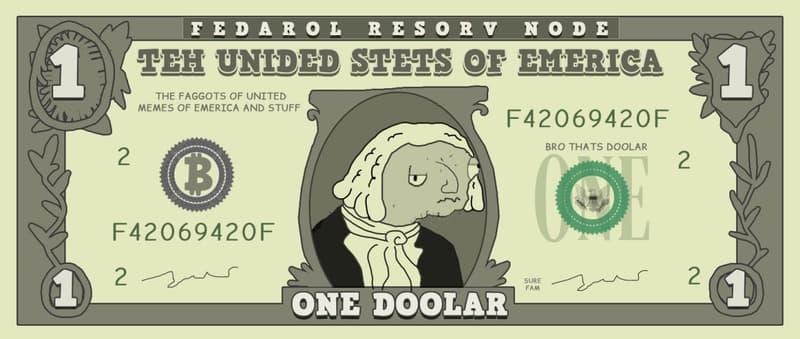
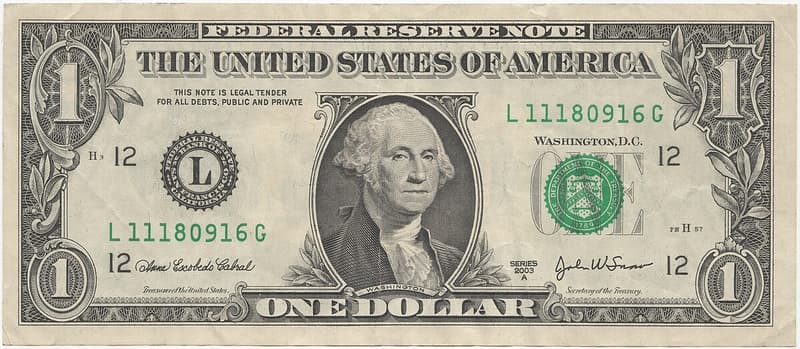
The Official Currency of the United States of America
World Reserve Currency • Est. 1792 • ISO 4217: USD
"Stabilize the Unided Stets Doolar.
Ensure 1 $USD always equals 1 $USD.
External reality will not be considered."
The United States dollar (symbol: $; code: USD) is the official currency of the United States and several other countries. It is divided into 100 smaller units called cents (symbol: ¢).
The U.S. dollar is the world's primary reserve currency, held by many central banks and commercial institutions worldwide. It is also the most widely used currency in international transactions and is the dominant currency for global commodity pricing, including oil and gold.
As of 2024, approximately $2.33 trillion in U.S. currency is in circulation, roughly 45% of which is held outside the United States.
Lockd in Streamflow smart contrackt. Can NOT be sold, transferd, or ruggd. Safu for holdrs. Verifye on-chayn.
Verifye on STREAMFLOW
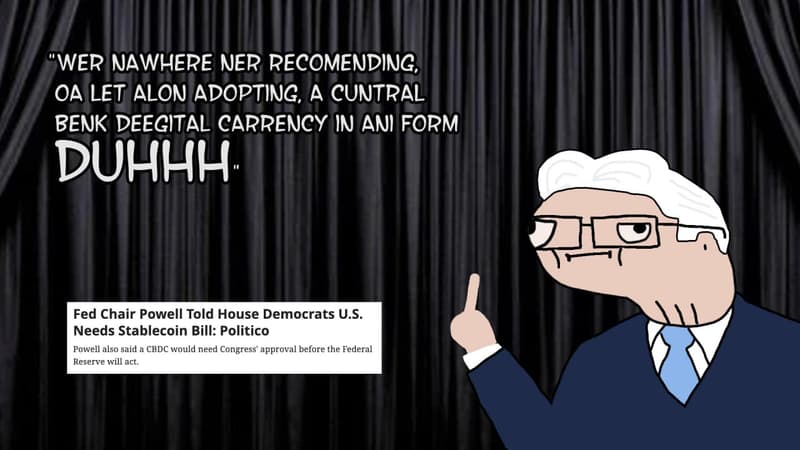
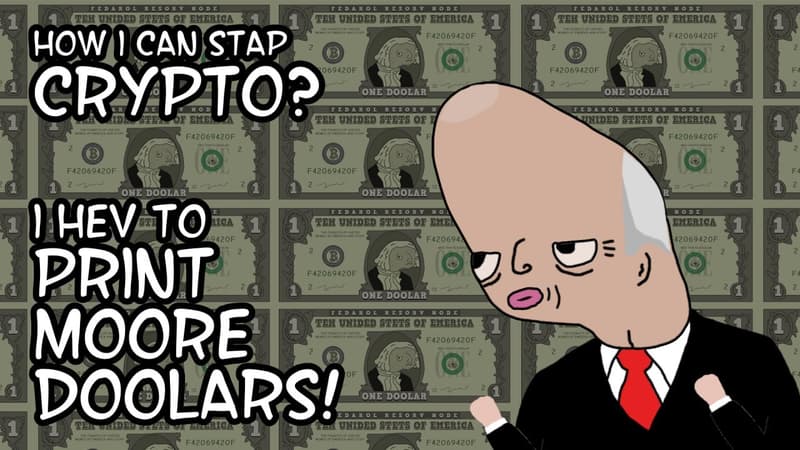
"The Doolar was created after an intern from the Quality Learing Center misspelled 'United States Dollar.'
A full investigation was conducted.
Fixing the error was deemed too expensive.
The error was therefore declared intentional."
The dollar was authorized by the Coinage Act of 1792, which established the United States Mint. The word "dollar" derives from the German Thaler, a coin used throughout Europe.
The dollar was originally defined as 371.25 grains of pure silver or 24.75 grains of gold. The Gold Standard Act of 1900 formally placed the United States on the gold standard. In 1933, President Roosevelt ended domestic gold convertibility.
The Bretton Woods Agreement (1944) established the dollar as the world’s reserve currency, pegged to gold at $35/oz. In 1971, President Nixon ended the dollar’s convertibility to gold, ushering in the era of fiat currency.
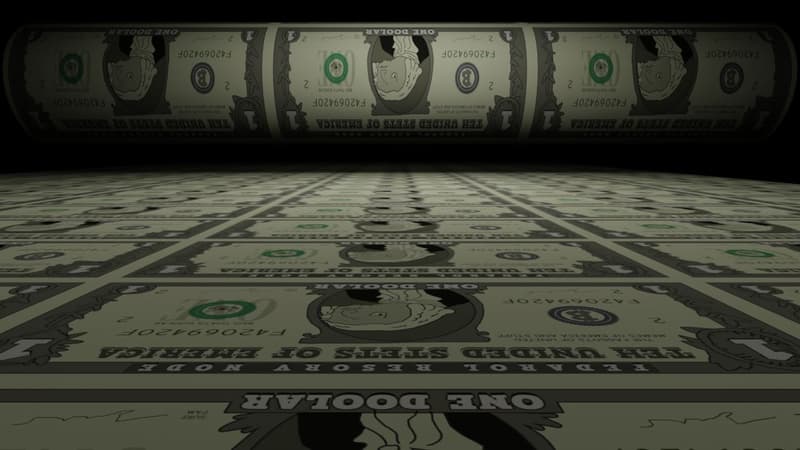
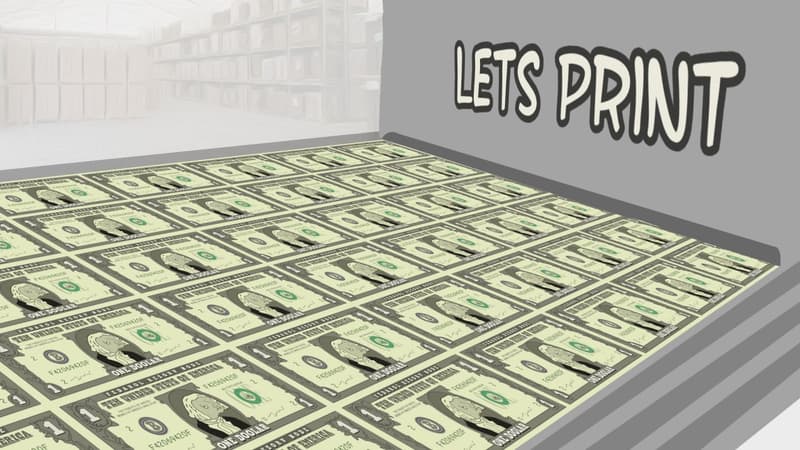
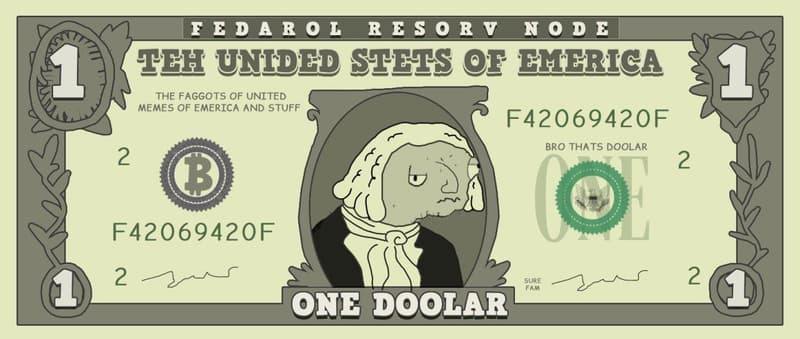
"We print more money to reduce inflation.
If inflation increases, we print more to fight it harder.
If the problem persists, additional printing will be deployed."
The Federal Reserve System, established in 1913, serves as the central bank of the United States. It conducts monetary policy through three primary tools: open market operations, the discount rate, and reserve requirements.
The Fed’s dual mandate is to promote maximum employment and price stability (targeting ~2% annual inflation). During the 2008 financial crisis, the Fed introduced quantitative easing (QE), purchasing trillions in government bonds and mortgage-backed securities.
The Federal Funds Rate, the interest rate at which banks lend to each other overnight, is the Fed’s primary mechanism for influencing economic activity.

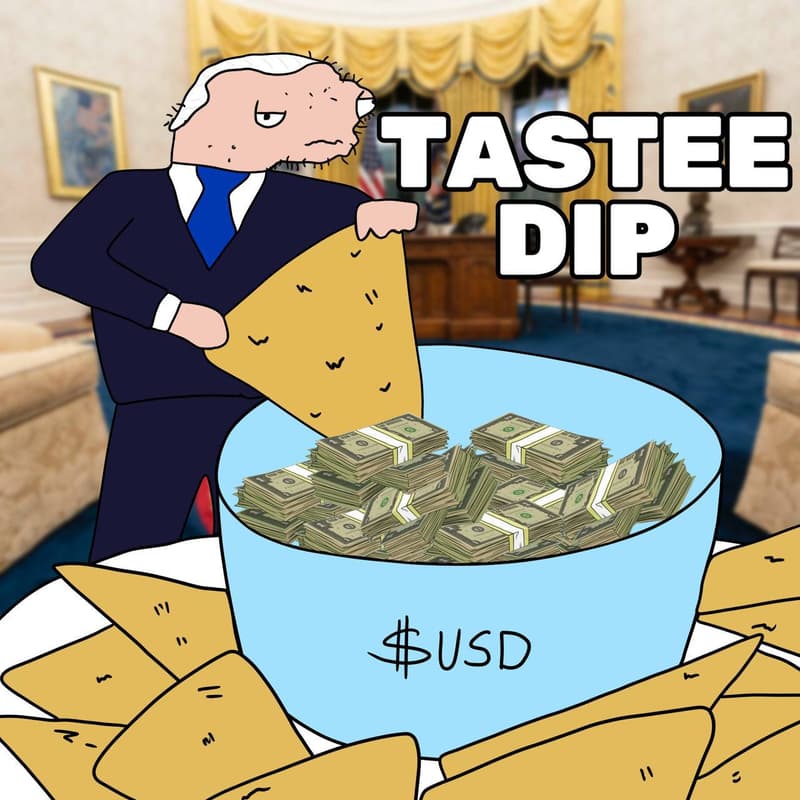
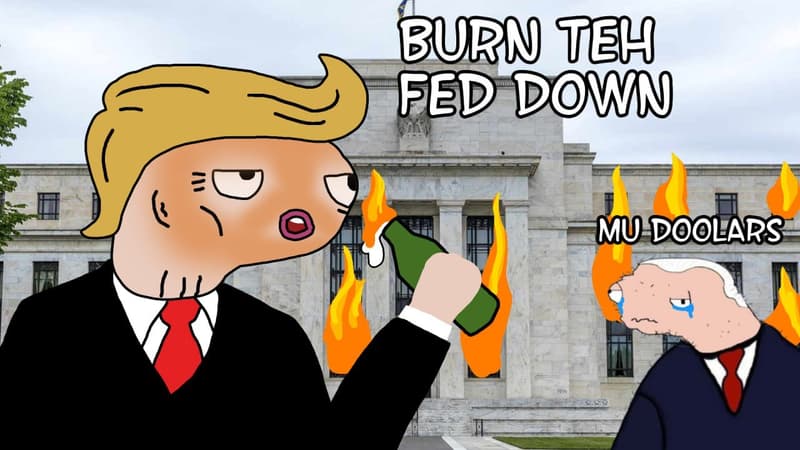
"Markets are closely monitored at all times.
Action will be taken once it is no longer effective."
The U.S. maintains economic stability through a combination of fiscal policy (government spending and taxation) and monetary policy (interest rates and money supply management).
The U.S. Treasury Department manages government revenue and spending, while the FDIC insures bank deposits up to $250,000, safeguarding consumer confidence in the banking system. The Dollar Index (DXY) measures the dollar’s strength against a basket of six major currencies.

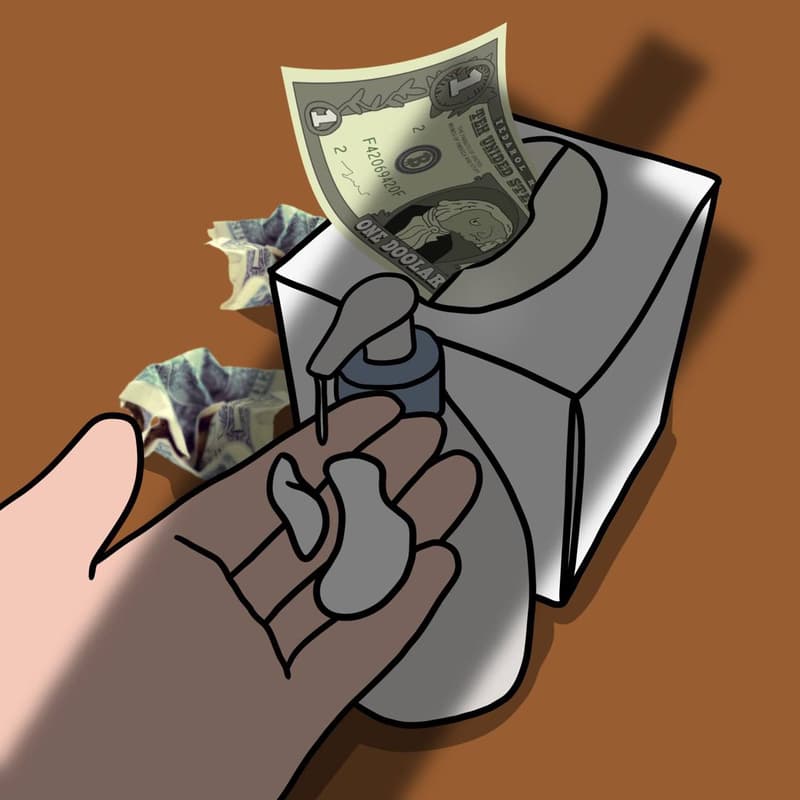

"Inflation ensures fairness across all citizens.
Purchasing power will be reduced equally.
This is considered progress."
Inflation measures the rate at which the general price level of goods and services rises, eroding purchasing power. The U.S. Bureau of Labor Statistics tracks inflation via the Consumer Price Index (CPI).
Since 1913, the dollar has lost approximately 96% of its purchasing power. What cost $1 in 1913 would cost roughly $31 today. The Fed targets a 2% annual inflation rate as consistent with price stability.
Notable inflation periods include the 1970s stagflation (peaking at 14.8% in 1980) and the 2021–2023 post-pandemic surge (peaking at 9.1% in June 2022).



"In the Unided Stets, everyone is equal.
Rich or poor, all portfolios decline together.
Disparity has been successfully eliminated."
The U.S. dollar’s dominance extends far beyond American borders. The petrodollar system, established in the 1970s, means that global oil is predominantly priced and traded in dollars, creating constant worldwide demand.
Approximately 88% of all foreign exchange transactions involve the dollar on one side. Central banks worldwide hold roughly 59% of their reserves in USD, followed by the Euro at 20%.
Many countries peg their currencies to the dollar or use it as legal tender alongside their own currency (e.g., Ecuador, El Salvador, Panama).

"We actively encourage financial innovation.
New instruments will be developed to accelerate losses.
Efficiency is our priority."
The United States has the world’s largest economy by nominal GDP at over $27 trillion (2024). The dollar’s stability and the depth of U.S. capital markets attract global investment.
The New York Stock Exchange (NYSE) and NASDAQ are the world’s two largest stock exchanges by market capitalization. The U.S. Treasury bond market is considered the global benchmark for risk-free assets.
Recent innovations include digital payment systems, exploration of a potential digital dollar (CBDC), and the integration of blockchain technology into traditional financial infrastructure.


"Liquidity remains strong across the system.
Access is restricted to maintain stability.
Stability is restricted to maintain liquidity."
The dollar is the world’s most liquid currency. The daily foreign exchange market turnover exceeds $7.5 trillion, with the majority involving USD-denominated pairs.
The U.S. Treasury market is the deepest and most liquid bond market in the world, with over $26 trillion in outstanding debt. Treasury bills, notes, and bonds serve as the benchmark for global interest rates.
The Federal Reserve’s discount window and various lending facilities provide backstop liquidity to the banking system during periods of stress.
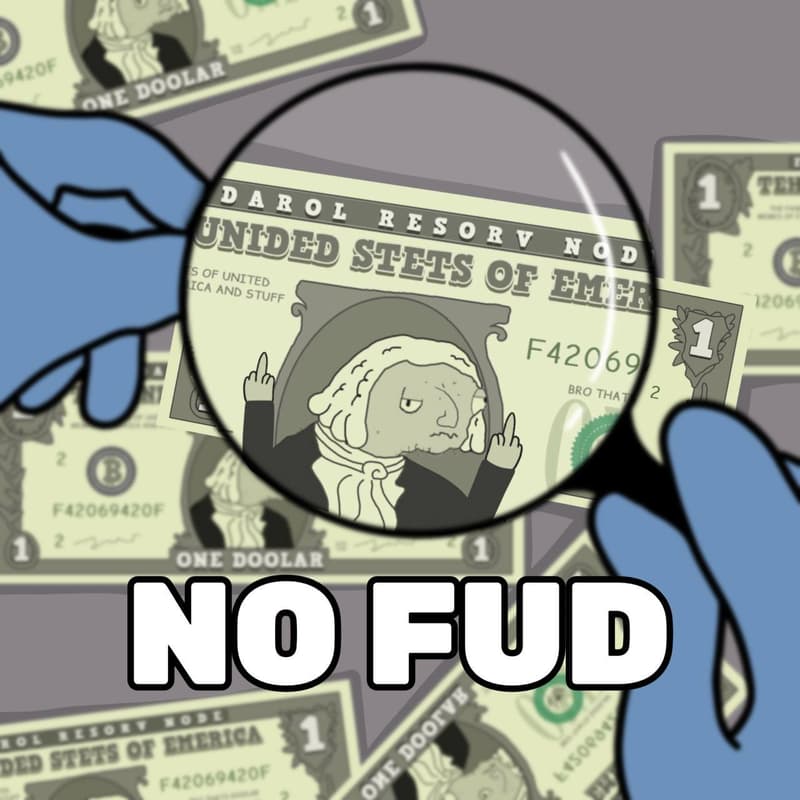

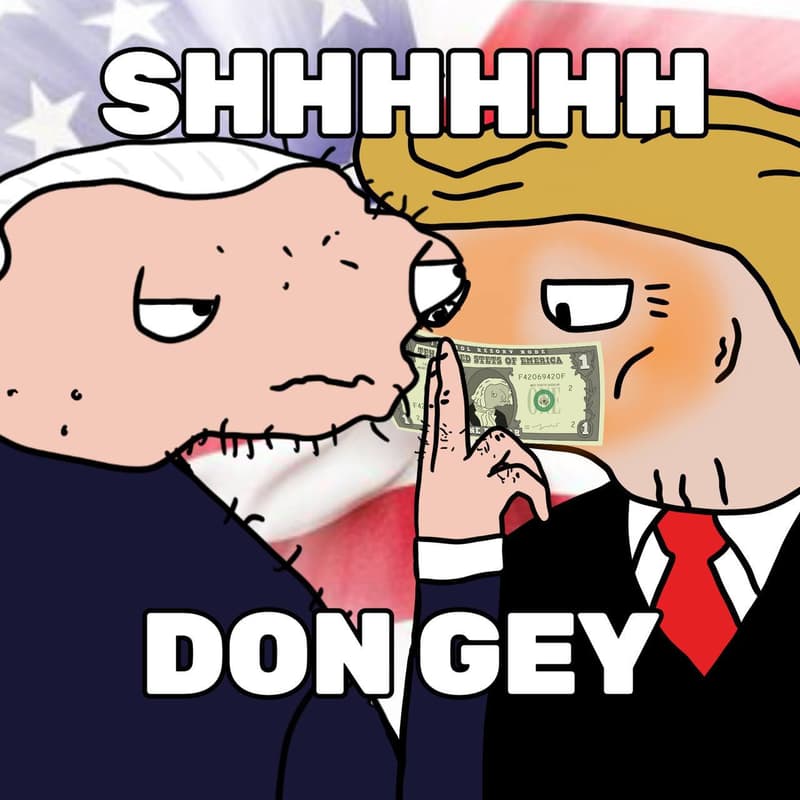
"All financial activities are fully audited.
Audit results are currently unavailable."
The U.S. financial system is regulated by multiple agencies: the SEC (securities), CFTC (commodities), OCC (national banks), FDIC (deposit insurance), and the Federal Reserve (monetary policy & bank supervision).
The Government Accountability Office (GAO) audits the Federal Reserve annually. However, the Fed’s monetary policy decisions and transactions with foreign central banks are exempt from GAO audit, a point of ongoing political debate.
Anti-money laundering (AML) and Know Your Customer (KYC) regulations are enforced by FinCEN under the Bank Secrecy Act.
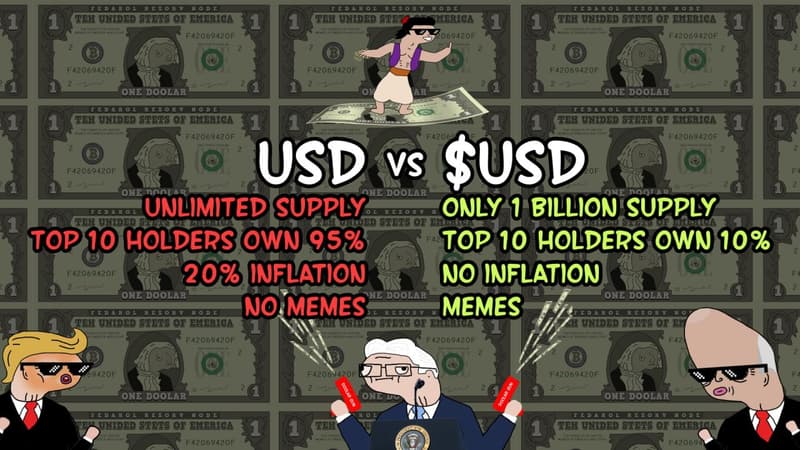
Wich one is teh REEL currensee? Lets find out ser 🧐
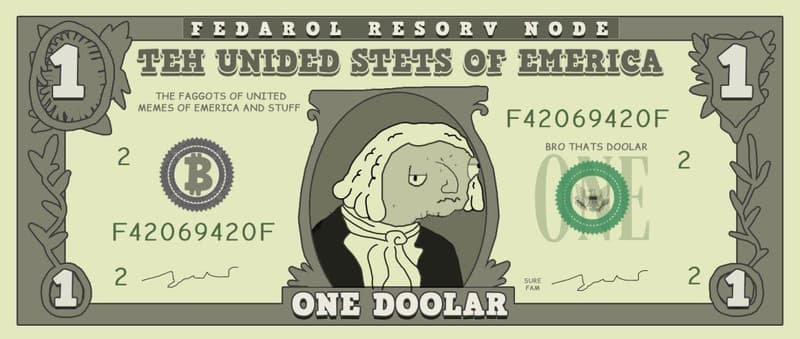
Teh verdict iz UNANIMUS ser. $USD iz teh supeerior currensee. Not finanshul advise tho (it totally iz) 🫡
REEL-TYME NUMBRS — Updaeted evree 30 sekonds
LIVE CHRT — Teh Numbrs Go Up (and sumtimes down but mostly up trust me bro)
Get Phantom wallet from phantom.app. It is teh best walet for Solana.
Buy SOL from an exchnage and send it to your Phantom walet adress.
Navigate to pump.fun and conect your Phantom walet.
Paste teh contract adress, choose your amount, and buy $USD. Congrajulashuns!
Offishul Propaganda Generator — Create & Share Doolars Meems
HIT TEH BUTTON TO GENERATE A MEEM
Offishul Propaganda of teh Unided Stets

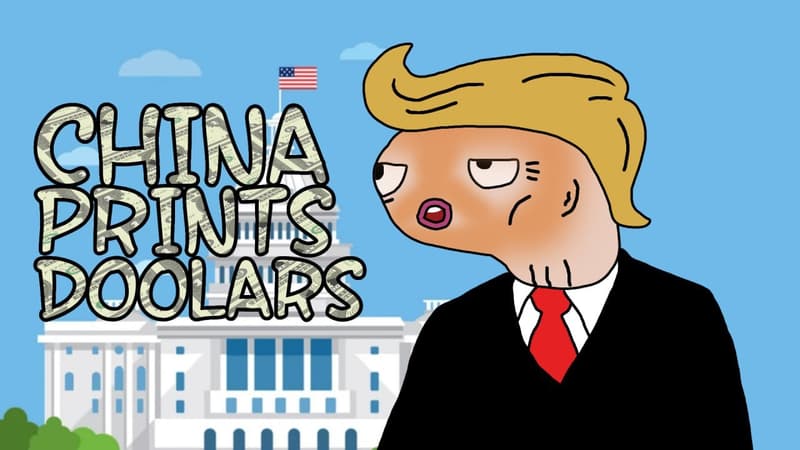







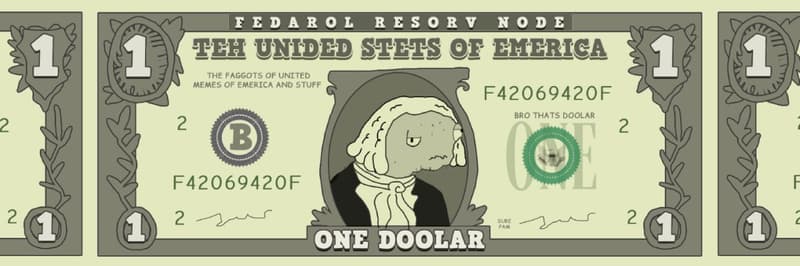
Teh Fedarol Resorv Node has appruved this mesage.
After reviewing 230+ years of data, our analysts have reached a conclusion.
Join the financial revolution. Buy $USD before normies figure it out.
Explore the history and mechanics of the world's most important currency.